
Economics
The effects of flooding, storms, and salinization have heavy economic implications. Coastal home ownership comes with steep insurance and maintenance costs, and towns spend more on infrastructure services and disaster relief in vulnerable areas.
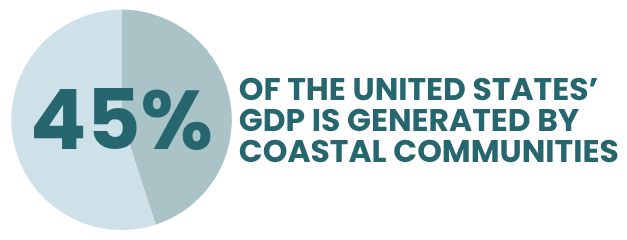
Yet, many communities have not made large-scale plans to lessen these impacts. A perceived lack of economic incentive can deter local leaders from taking action. When choosing adaptation strategies, elected officials and planners must consider their affordability.
Economic circumstances play a major role in which plans locals are willing to support. Understanding these relationships is the key to crafting viable coastal solutions. Tailoring coastal adaptation plans to specific communities’ needs makes local action much more favorable.
Effective adaptation may also help reduce infrastructure services costs, stabilize the pricing in local housing markets, and ensure long-term agricultural sustainability for local farmers whose livelihood is threatened by salinization.
RISCC Objective 4 quantifies the economic impacts of flooding and salinization while working to best understand diverse perspectives and support for adaptation plans in both urban and rural communities.
Research Impacts
- Analyzes economic impacts of coastal hazards and the strategies available to affected communities.
- Conduct economic experiments to best understand residents’ decision-making.
- Informs policies and programs to support local farmers.